George Perkins
Marion's Merry Men
Volunteer Militia Man
George Perkins was born on March 22, 1754, in Liberty County (now Marion County), South Carolina. He was identified in historical records as a free African American. As a young man, Perkins lived near the border of South Carolina and North Carolina, where many families moved as new settlements formed along the frontier.
During the American Revolution, Perkins served several times in local militia units. In May 1776, he first joined the South Carolina militia as a substitute soldier under Captain James Gregg at Charleston. The following month he served again at Haddrell’s Point near Fort Moultrie and was present during the Battle of Sullivan’s Island, an important early American victory against the British. Later that year he continued serving with militia forces guarding the Charleston area.
After moving to North Carolina, Perkins volunteered for additional militia duty. Between 1777 and 1780 he served under several officers, including Captain John Cade, Colonel Thomas Brown, and Captain Peter Robeson. Much of his service involved guarding settlements and scouting for Loyalists, who supported the British and sometimes attacked Patriot communities.
In 1780, Perkins joined the forces of General Francis Marion, the famous partisan leader known as the “Swamp Fox.” Serving under Captain Moses Pearson, he helped track and fight Loyalist groups that were raiding farms and burning homes in South Carolina. His time in the militia added up to about one year and eight months of service during the war.
Around 1780, Perkins married Keziah Manning in Bladen County, North Carolina. After the war, the couple moved several times as the American frontier expanded westward. They lived for many years along the Watauga River in what later became Tennessee. In 1813, the family moved to Lawrence County, Kentucky, where Perkins later applied for a federal pension in 1834 because of his Revolutionary War service.
In his later years, Perkins moved again to the Iowa Territory to live with one of his daughters. He died on November 15, 1840, in Lee County, Iowa, at about eighty-six years old. George Perkins is remembered today as a Patriot of the American Revolution and is recognized by both the Sons of the American Revolution and the Daughters of the American Revolution for his military service.
Through hardship and war, he endured.
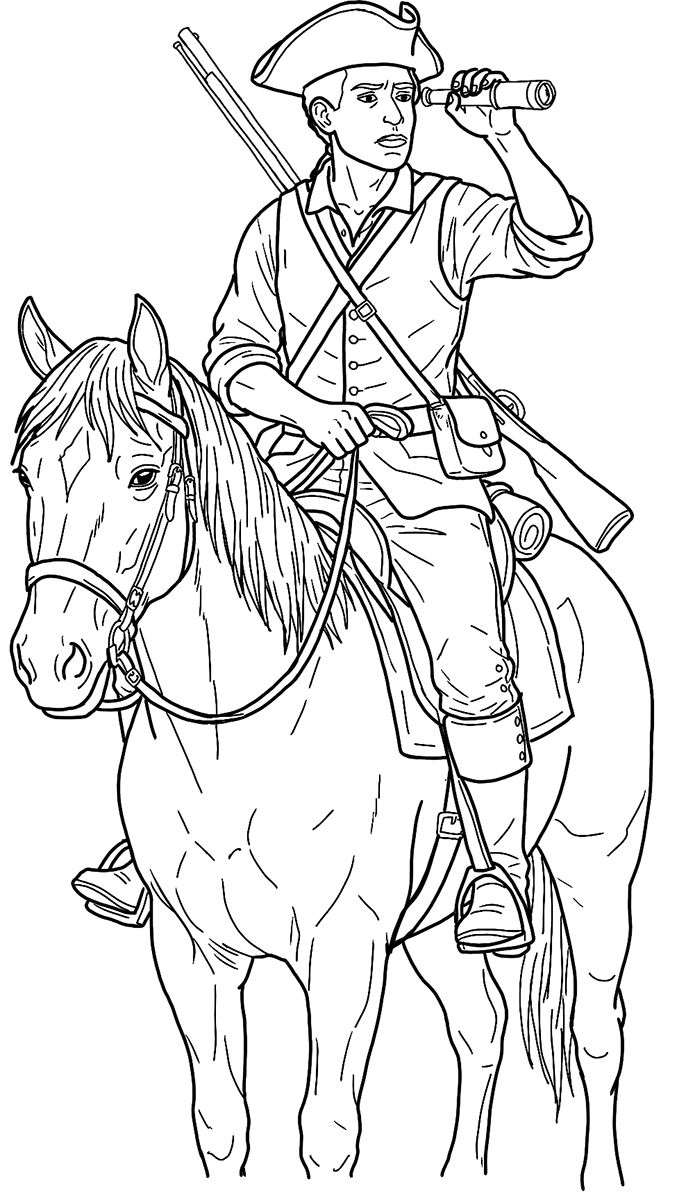
Description of George Perkins
George Perkins was approximately 22 years old in 1776 when he entered militia service. Of mixed ancestry, he possessed predominantly European features and, over time, was able to pass as white. Census records reflect this transition, initially identifying him as a free person of color and later classifying him as white—illustrating the fluid and often inconsistent nature of racial designation during the period. His appearance likely included a primarily European facial structure, with naturally curly hair, a slightly broader nose, and moderately proportioned lips. His complexion may have been somewhat darker than that of individuals of solely European descent, though not necessarily distinctive at a glance. He had an average build for the era—neither notably heavy nor particularly lean. As a free, educated, and literate man, Perkins would likely have been comparatively well cared for in his early life. During his service, he would have worn standard militia attire. Perkins was recognized as a skilled horseman and served as a mounted scout, particularly in operations against Loyalist forces. He also performed guard duty at Sullivan’s Island. In this depiction, he is shown on horseback, engaged in scouting—reflecting his mobility, experience, and role within the militia.