Jacob Perkins
Marion's Merry Men
Volunteer Militia Man
Jacob Perkins was born around 1756 in South Carolina, likely near the Pee Dee River. Historical records identify him as a free African American and suggest that he may have been the brother of George Perkins, another Patriot of the American Revolution.
During the Revolutionary War, Perkins served with the American forces in South Carolina. According to later testimony from family members and neighbors, he fought under General Francis Marion and Colonel Peter Horry in the South Carolina militia. Marion, known as the “Swamp Fox,” led small groups of soldiers who carried out surprise attacks and skirmishes against British troops and Loyalists. Perkins reportedly took part in these kinds of engagements while living in the Pee Dee River region.
After the war, Perkins moved west to the frontier areas of North Carolina and later Tennessee. When he settled in what became Carter County, Tennessee, he also served in several militia tours protecting local communities from attacks by Native American groups. During this time he served under officers such as Captain Joseph Ford and Captain Bullard.
Perkins worked as a schoolteacher and was known by his neighbors as an honest and respected member of the community. He married Nancy Ann Graves, and the couple raised several children together. Records show that Perkins owned land in Washington County, Tennessee, where he was taxed on 200 acres in the late 1780s and purchased additional land in 1791.
Jacob Perkins died on April 4, 1819, in Tennessee. Many years later, his son applied for Revolutionary War benefits on his behalf, but the claim was rejected because there was not enough official proof of his service. Even so, family members and neighbors remembered Perkins as a patriot who had served his country during the struggle for American independence.
His service helped shape a new nation.
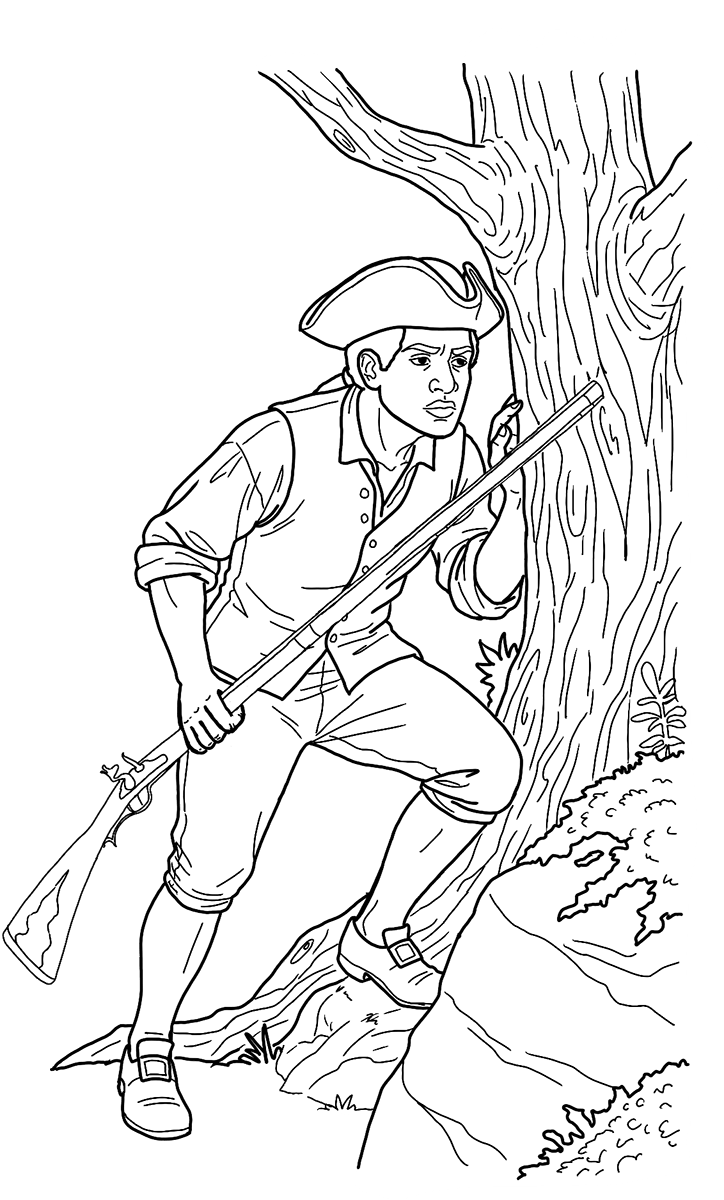
Description of Jacob Perkins
Jacob Perkins was likely in his twenties during the American Revolution, approximately the same age as his brother George. A man of African descent with a darker complexion, he is consistently identified in historical census records as a free Black man, reflecting the more rigid racial classifications applied to individuals of visibly African heritage during the period. His facial features likely combined elements of European structure with characteristics associated with his African ancestry, including tightly curled hair, a broader nose, and fuller lips. His eyes may have appeared slightly downturned or hooded. He had an average build for the time—neither notably heavy nor particularly lean. As a free and educated individual—later becoming a schoolteacher—Perkins would likely have been well maintained in both appearance and bearing. During his militia service, he would have worn practical, standard attire such as a hunting shirt, breeches, and sturdy shoes suited to the demands of field service.