Joshua Braveboy
Marion's Merry Men
Revolutionary War Soldier
Joshua Braveboy was a soldier in the American Revolutionary War and a free Black man, possibly of Lumbee heritage. He was born in North Carolina around 1740 and moved to South Carolina in 1771, where he received land near Lynches Creek. Before the war, he worked as a farmer and landowner.
During the Revolutionary War, Braveboy served in the South Carolina militia under General Francis Marion between 1780 and 1781. He took part in several skirmishes and continued his service in another militia unit in 1782. Records show he was paid for his time in the militia, including over 100 days of service, and he even lost a horse during the war.
After the war, Braveboy lived the rest of his life in Williamsburg County, South Carolina, on his plantation. He died in 1820 at about 80 years old. Historical records note that he earned his freedom through his military service, and his family later became landowners in the area.
Joshua Braveboy’s life is important because it shows the role that free Black and Native-descended soldiers played in the fight for American independence. His story helps us better understand the diverse people who supported the Revolutionary War effort.
Rooted in the land, committed to freedom.
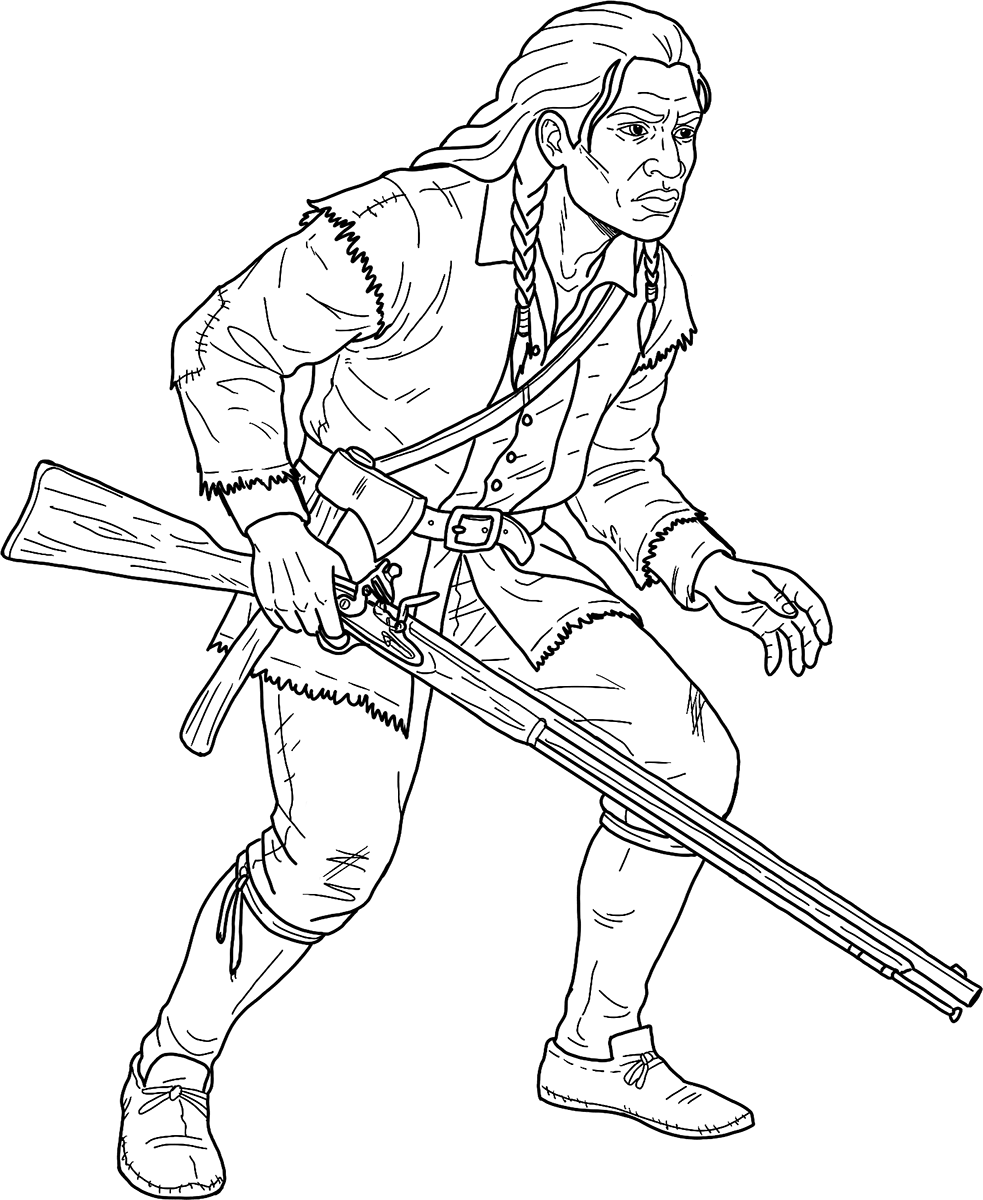
Description of Joshua Braveboy
Joshua Braveboy was a mature man, likely in his thirties to forties, during his service under Francis Marion. Of mixed African and Indigenous ancestry—possibly connected to the Lumbee Tribe—he would have reflected a combination of these cultural and physical backgrounds. He likely wore his hair long and dark, with features that may have included almond-shaped eyes, a broader nose, and fuller lips. His build would have been sturdy and capable, shaped by years of labor farming his land near Lynches River. During his militia service, Braveboy would have worn practical clothing such as a hunting shirt, breeches, and durable shoes, likely showing signs of wear from extended time in the field. In this depiction, he is shown foraging and hunting for provisions, illustrating the essential role such skills played in sustaining troops during the campaign.