Josiah Cockfield
Marion's Merry Men
Revolutionary War Soldier
Josiah Cockfield was a farmer and soldier from South Carolina who served during the American Revolutionary War. He was born in 1755 and grew up in the Georgetown District, where he later worked on a farm. When the war began, Cockfield joined the South Carolina militia and fought under General Francis Marion, a leader known for his fast and surprising attacks.
In 1780, Cockfield took part in a fight at Nelson’s Ferry, where he was badly wounded after being shot in the chest. Even after this serious injury, he survived and returned to serve again, showing great courage and determination. His actions made him one of the many brave soldiers who supported the Patriot cause in the South.
After the war, Cockfield returned to his life as a farmer and lived on his family’s plantation. He died on March 15, 1796, in Darlington, South Carolina. Although there is no known pension record for his service, his story is remembered through historical records that highlight his bravery and dedication during the Revolutionary War.
From Lynches Creek rode a Pee Dee Patriot.
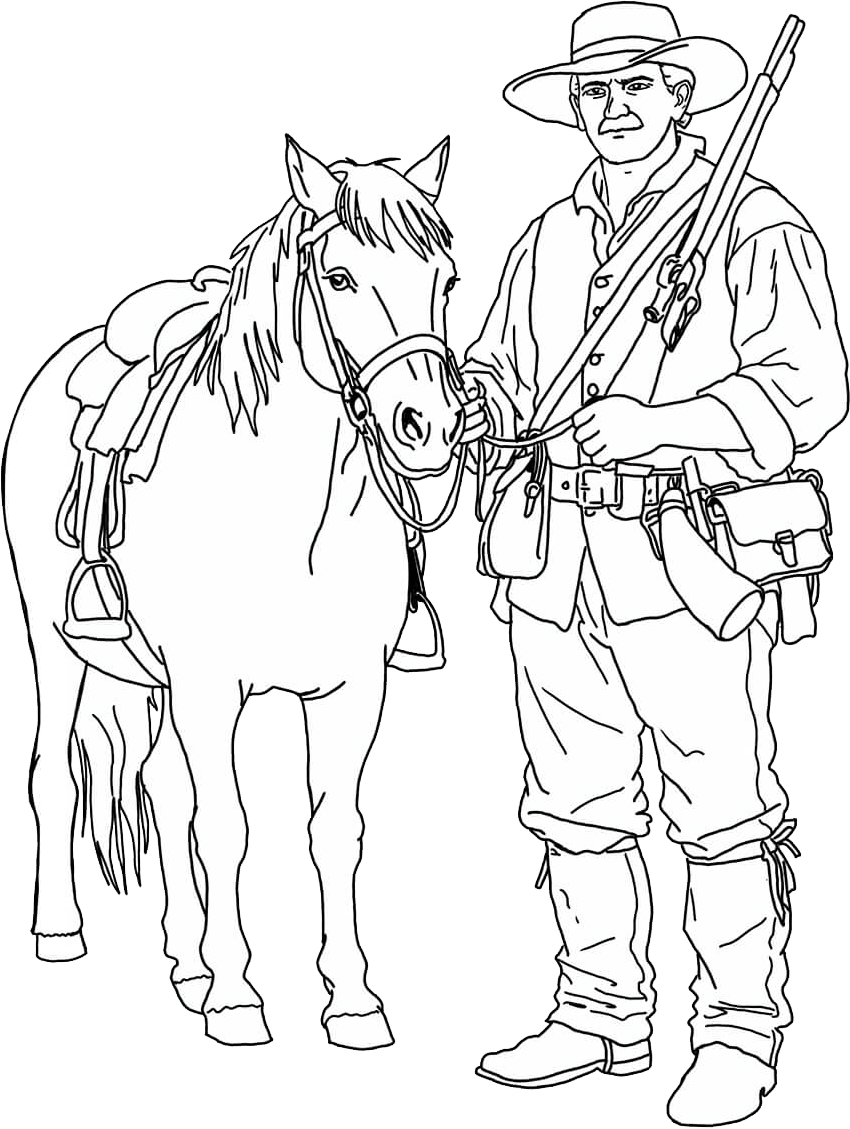
Description of Josiah Cockfield
Josiah Cockfield was in his mid-twenties during his service under Francis Marion. Of European descent, he was a farmer from the Georgetown District in South Carolina. His physique would have reflected the demands of agricultural labor, with a sturdy and well-developed build. Historical accounts note that he sustained a significant injury during the fighting at Battle of Nelson's Ferry, where he was struck in the chest by a musket ball. Despite the severity of the wound, he survived and ultimately returned to service. As a militia soldier, Cockfield would have worn practical and durable clothing typical of the period, including a hunting shirt, breeches, and rough shoes—attire well suited to the needs of a Carolina farmer serving in wartime. Here he is pictured with a Marsh Tacky horse which was popular with colonists at the time. He is also sporting a mustache that Marion requested his men grow for a season in 1779, only to then go back to the clean shaven look.