Francis Marion
Marion's Merry Men
Partisan Leader
Francis Marion was born on February 26, 1732, in Berkeley County, South Carolina, and grew up on a small plantation. As a teenager, he went to sea but returned home after surviving a shipwreck. In his mid-twenties, he joined the militia during the French and Indian War, where he gained important battle experience, especially while fighting in the Anglo-Cherokee War. There, he learned to use the land, move quickly, and launch surprise attacks—skills that would later define his leadership.
During the American Revolution, Marion helped defend Charleston. Before the city fell to the British in 1780, he broke his ankle and left to recover, which allowed him to avoid capture. Afterward, he took command of a small militia force in the swamps and forests of South Carolina. Instead of fighting large battles, Marion used hit-and-run attacks to disrupt British supply lines and defeat larger enemy forces, helping keep the Patriot cause alive in the South. His speed and ability to disappear into the landscape earned him the nickname “Swamp Fox.”
After the war, Marion returned home to find his plantation damaged. He rebuilt his life, married later in life, and served in South Carolina’s government. He also worked to protect former Loyalists from mistreatment. Francis Marion died in 1795 at the age of 63 and is remembered as a skilled and resourceful leader, often called one of the fathers of modern guerrilla warfare.
The Swamp Fox depended on many forgotten patriots.
Description of Francis Marion
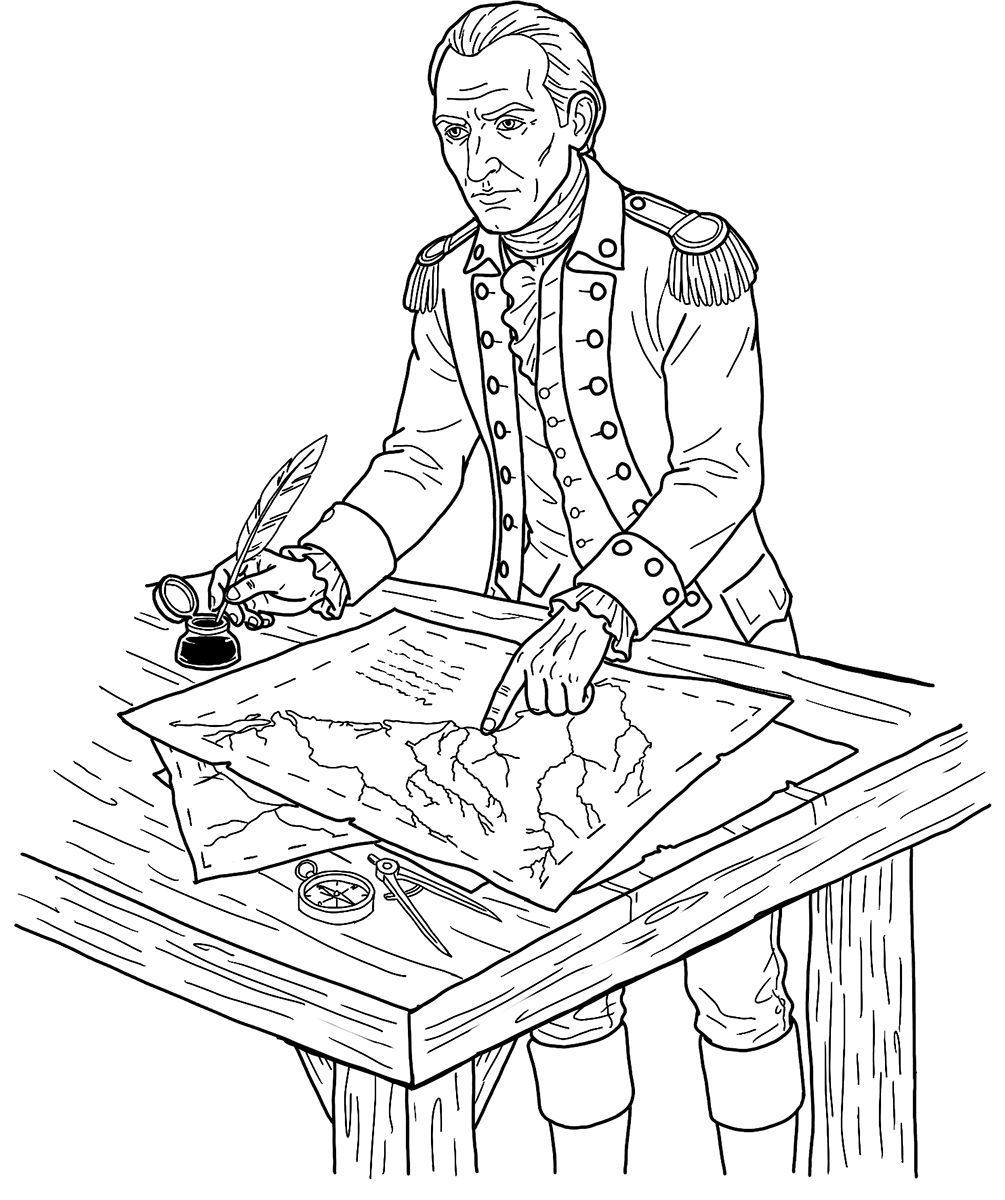
Francis Marion was in his early to mid-forties during the American Revolution. Of European descent, he was often described as having a darker, weathered complexion. He stood below average height, with a lean, wiry build that reflected both endurance and resilience. His facial features conveyed a thoughtful and determined character, including dark, penetrating eyes, an aquiline nose, and a high forehead. Contemporary accounts also note that his legs were somewhat irregularly formed at the knees and ankles. He was typically clean-shaven. As a Continental Army officer, Marion would have worn a formal uniform consisting of a blue coat with buff facings, a waistcoat, breeches, and polished boots—attire appropriate to his rank and command. In this depiction, he is shown standing over a table spread with maps of eighteenth-century South Carolina, engaged in strategic planning, emphasizing his role as a resourceful and calculating leader.